
· La rédaction de Tadaksahak TV · Event
Tagadayat: The Duty Not to Look Away
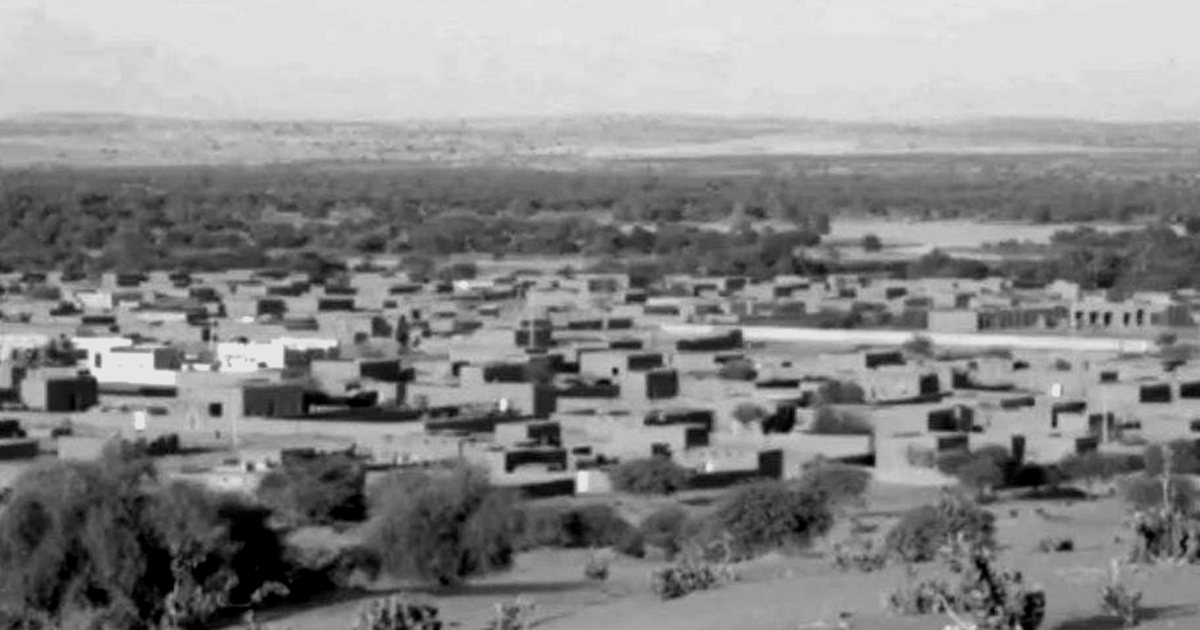
Forty-eight dead — a toll still provisional — and bodies no one dares to bury. A record, a memory, and an appeal to the world.
On 18 and 19 October 2026, camps of the Idaksahak community were struck at Tagadayat, some forty kilometres south of Ménaka, in north-eastern Mali. We do not come to add noise to noise. We come to name, to document, and to refuse forgetting. It is our only duty, and the most demanding of all.
The dead no one dares to bury
There are silences that kill a second time.
At Tagadayat, the Executive Bureau of the Idaksahak community reports forty-eight civilians killed — a toll it confirms, while calling it provisional. News agencies speak of "more than forty" dead; some cite a range of forty-eight to more than seventy victims across several camps. The figures are still shifting, because the horror has not finished being counted.
But beyond the numbers there is this, which we cannot pass over in silence: bodies that no one yet dares to go and bury. In our faith as in every human tradition, burying the dead is the first of duties, the most sacred, the one that no war has the right to prevent. To leave a person without a grave is to kill him a second time. For this too we demand an accounting.
To name, so that no one is erased
A list of thirty-three names, for the Ataram Kon fraction alone, has reached our newsroom. Thirty-three names that are not statistics: they are fathers, sons, neighbours, men who had a face, a voice, a herd, a place under a tree.
We will name them one by one, because to name is to resist erasure. Weapons kill bodies; forgetting finishes off the names. A people massacred in indifference dies twice: once under the bullets, once in the silence. Our work as keepers of memory begins there: wresting each name from the night.
What is known, what the sources say
We report here what each source states, attributing it, settling nothing we could not verify.
The Executive Bureau of the Idaksahak community, in a statement issued in Ménaka on 19 October, reports 48 civilians killed on Sunday 18 October at Tagadayat, in attacks carried out by Islamic State fighters who arrived on motorcycles. It reports wounded, an exodus of families — women, children and the elderly — toward the town of Ménaka, and issues an urgent appeal for humanitarian aid.
The Collective for the Defence of the Rights of the People of Azawad (CD-DPA), in a statement signed by its secretary-general Tilla Ag Zeini (Timbuktu, 19 October), speaks of "a provisional figure of more than 40 civilians" killed and several missing. The Collective issues a "double condemnation" of the killing attributed to the Islamic State in the Greater Sahara (ISGS) and of an earlier operation: according to it, the Malian Armed Forces and "their Russian partners from Africa Corps" allegedly targeted civilian property at Inarabane on 15 October, which allegedly triggered the escalation. The CD-DPA demands independent international investigations. These claims, phrased by the Collective in the conditional, have not been independently verified and have drawn no official response.
The international news agencies (AFP, Reuters) confirm deadly raids on camps in the Ménaka region and the displacement of several hundred families. They note that, at this stage, the Islamic State has not claimed the attack.
The Malian authorities. At the time of writing, no official reaction from the state or its media has been made public.
The silence of the airwaves
On 20 October, an excerpt from Mali’s national radio (ORTM, 92.00) circulated among members of the community. Those who listened to it did not hear a single word about Tagadayat. We add it to the record, as it reached us.
Abdoul-Jalil Ag Salah, who was on the ground west of Ménaka during the events of 2016, puts it in his own way: "Injustice is not only the massacre. It is also the silence of the neighbours in the face of injustice." (our translation from French)
A tragedy with a history
What happened at Tagadayat is not an isolated accident. It is the latest chapter, to date, in a long enterprise of annihilation, and independent organisations have kept the record of it.
As early as March 2022, the Idaksahak (Daoussahak) community of the Ménaka region became a designated target. A United Nations mission counted at least 157 civilians killed in the Ménaka region alone between 8 and 28 March 2022, in attacks attributed to the Islamic State. That same year, Human Rights Watch documented "coordinated massacres" by Islamist armed groups against dozens of villages, "largely" targeting the Daoussahak — Aklaz, Awkassa, Tamkoutat, Taghatert, Inekar: a litany of names our families know by heart. Tens of thousands of people fled, into the rest of Mali and into Niger.
The bleeding has not stopped. In July 2023, Human Rights Watch reported hundreds of civilians killed since the start of the year in the Ménaka and Gao regions, and fresh mass displacement. In 2024, it noted that rivalry between ISGS and JNIM for control of the routes had cost hundreds of civilian lives, and documented, in August 2024, the attack on a camp for displaced people in Ménaka itself. Each time, the investigators stressed that their tolls were "conservative," so difficult is access to the field — in other words: the reality is always worse than the count.
Honesty obliges us to state the other side, for a keeper of memory who looks in only one direction is no longer a witness but a mouthpiece. The same organisations have documented abuses committed by state forces and their Russian allies. Human Rights Watch established the responsibility of the army and foreign soldiers in the Moura massacre in 2022, and then further atrocities by the army and the Wagner Group. In September 2026, Amnesty International, in a report titled "No One Is Spared," documented the killing of at least 34 civilians between June 2023 and December 2025 — some shot while fleeing or after being detained, others with their throats cut or burned — as well as torture, enforced disappearances, and two drone strikes that killed at least 23 civilians, including five children; it recalled that after Wagner’s withdrawal in June 2025, the Russian structure Africa Corps had taken over. In October 2026, Human Rights Watch again concluded that the army and its Russian allies, like the armed groups opposed to them, were committing abuses against civilians.
The constant, from one report to the next, from one year to the next, is always the same: the civilian, caught between every line of fire, pays the highest price. And among those civilians, the Idaksahak return, again and again.
A historian’s view
A recognised historian, a specialist on the Idaksahak, shared his anger with us. He refers to the Movement for the Salvation of Azawad (MSA). We report his analysis as he gave it to us; it is his alone.
"Deep down, what I think is that the MSA is also being exploited by the Malian state. The Malian army has done absolutely nothing to protect Idaksahak civilians. The MSA is used as its armed wing, like a militia… And this is the result: they are the ones dying in droves. It is sad and it makes me angry! Or else we have to accept that everyone is at war with everyone. But then it will never end — or it will end with the extermination of one group, as has already happened in history. All of this is so distressing!" (our translation from French)
The law, not revenge
In 1859, on the battlefield of Solferino, a Genevan named Henry Dunant found thousands of wounded and dead abandoned to their fate. From that gaze, refused to indifference, were born the Red Cross and then, in Geneva, the Conventions that today protect civilians in time of war. History proves it: to bear witness is not weakness; it is the beginning of protection.
It is in that tradition that we wish to place ourselves. International humanitarian law says one simple thing, that no one should have to be reminded of: civilians are never a legitimate target; the dead have a right to a grave; and those who kill the innocent — whatever their flag, their language or their faith — must answer for it.
We therefore demand neither reprisals, nor hatred, nor the setting of one people against another. We demand:
- official recognition of what happened at Tagadayat;
- the possibility of burying our dead, in dignity and safety;
- immediate humanitarian access to the displaced gathered at Ménaka;
- protection for the civilians still exposed;
- an independent international investigation, as human-rights organisations are calling for, and justice for all victims, without exception and without selection.
The bridge
We have chosen our weapon, and it is not the rifle. It is the pen, the proof and the memory.
We want to be a bridge: between grieving families and a world that looks away; between the communities of one country that some would set against one another; between grief, which cries out, and the law, which must answer. To be neutral, for us, does not mean to be indifferent: it means telling the truth to all, including when it troubles our own camp. Only at that price does a voice become a reference, and a people without an army make itself heard all the same.
Until we are answered, we will go on naming our dead and documenting the facts. Silence is our first enemy. We will not yield to it.
— The newsroom of Tadaksahak TV, keeper of memory.
Sources
- Executive Bureau of the Idaksahak community, statement, Ménaka, 19 October 2026.
- Collective for the Defence of the Rights of the People of Azawad (CD-DPA), statement No. 2026-005, Timbuktu, 19 October 2026 (secretary-general: Tilla Ag Zeini).
- News-agency dispatches (AFP, Reuters), 19-20 October 2026.
- Radio nationale du Mali (ORTM, 92.00), excerpt shared on 20 October 2026 (video above).
- A historian specialising in the Idaksahak, message to the newsroom, 20 October 2026.
- Abdoul-Jalil Ag Salah, message, 20 October 2026.
- United Nations: at least 157 civilians killed in the Ménaka region, 8-28 March 2022.
- Human Rights Watch, "Mali: Coordinated Massacres by Islamist Armed Groups," 27 October 2022.
- Human Rights Watch, "Mali: Mounting Islamist Armed Group Killings, Rape," 13 July 2023.
- Human Rights Watch, World Report 2024 — Mali chapter.
- Human Rights Watch, "Mali: Atrocities by the Army and Wagner Group," 12 December 2024.
- Human Rights Watch, "Mali: Massacre by Army, Foreign Soldiers" (Moura), 5 April 2022.
- Amnesty International, "No One Is Spared," September 2026.