
· La rédaction de Tadaksahak TV · Event
Rose Walet Moussa, a Voice for Idaksahak Children
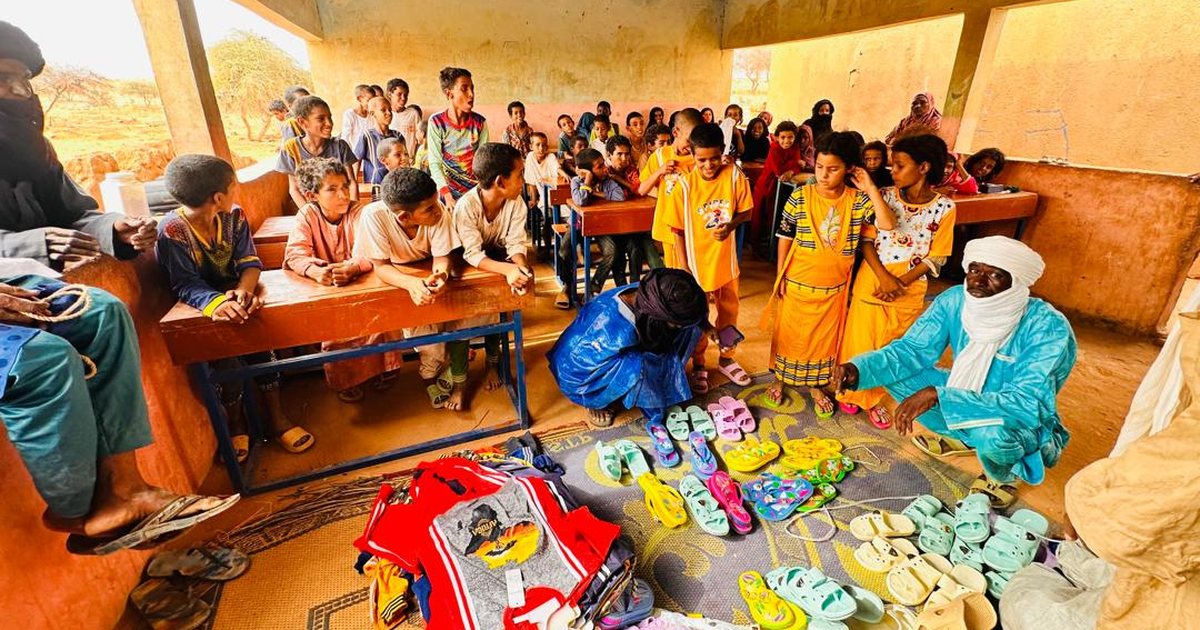
Since 2022, the massacres of Idaksahak civilians have also claimed silent victims: children deprived of school. With no association or NGO behind her, Rose Walet Moussa raised funds and gave from her own pocket for them. She deserves to be heard by the world, and supported.
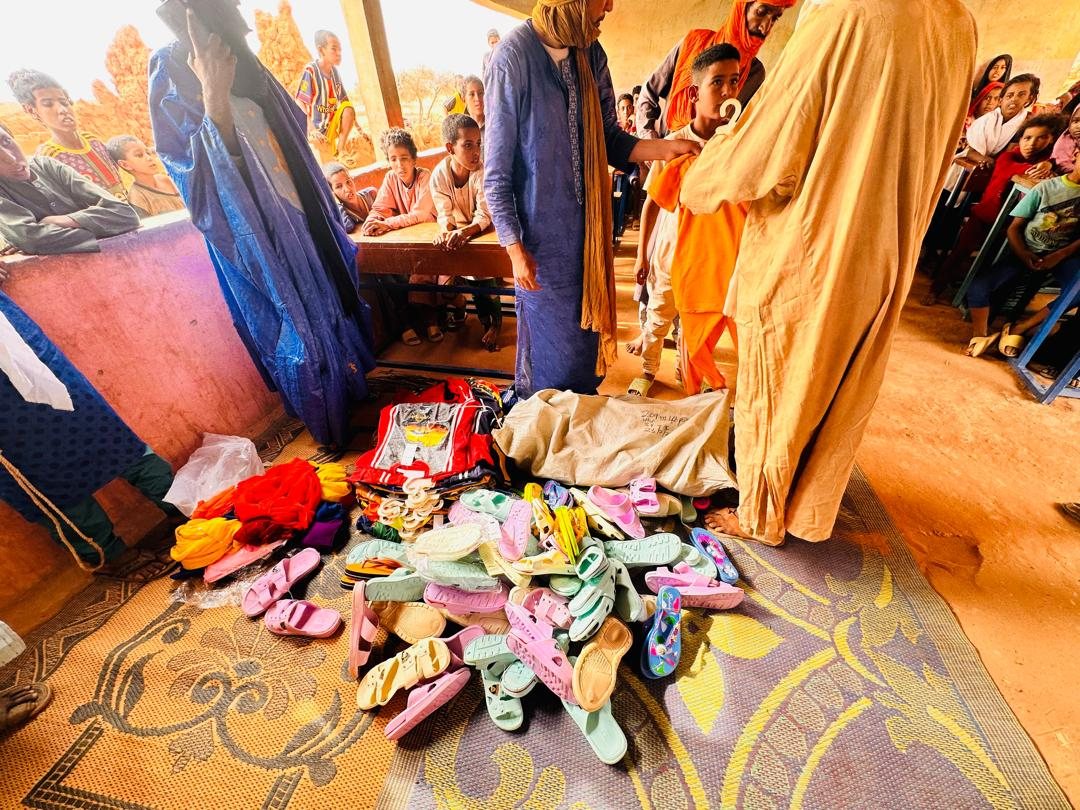
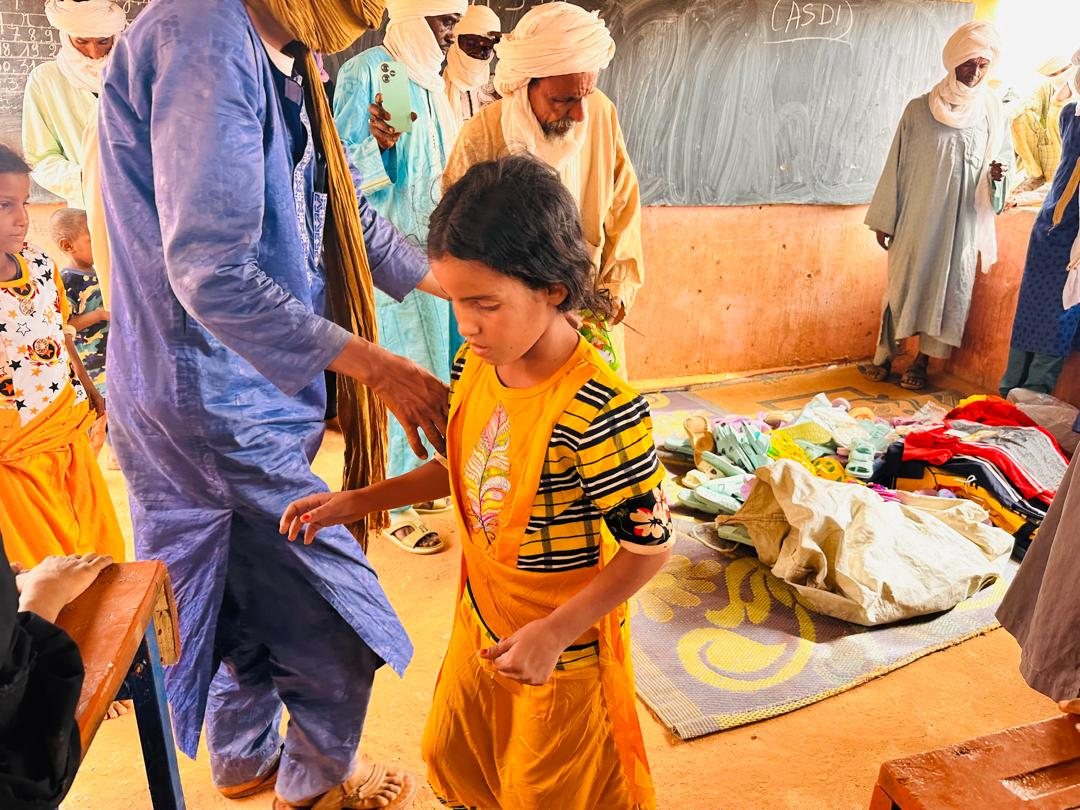
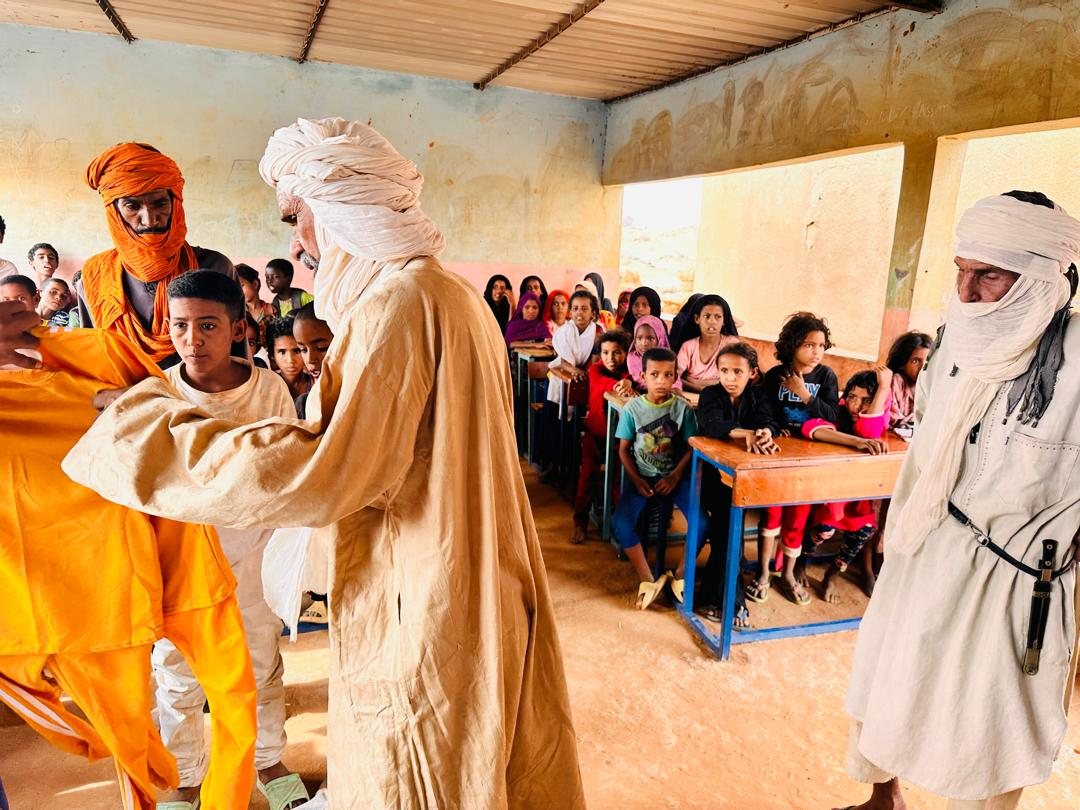
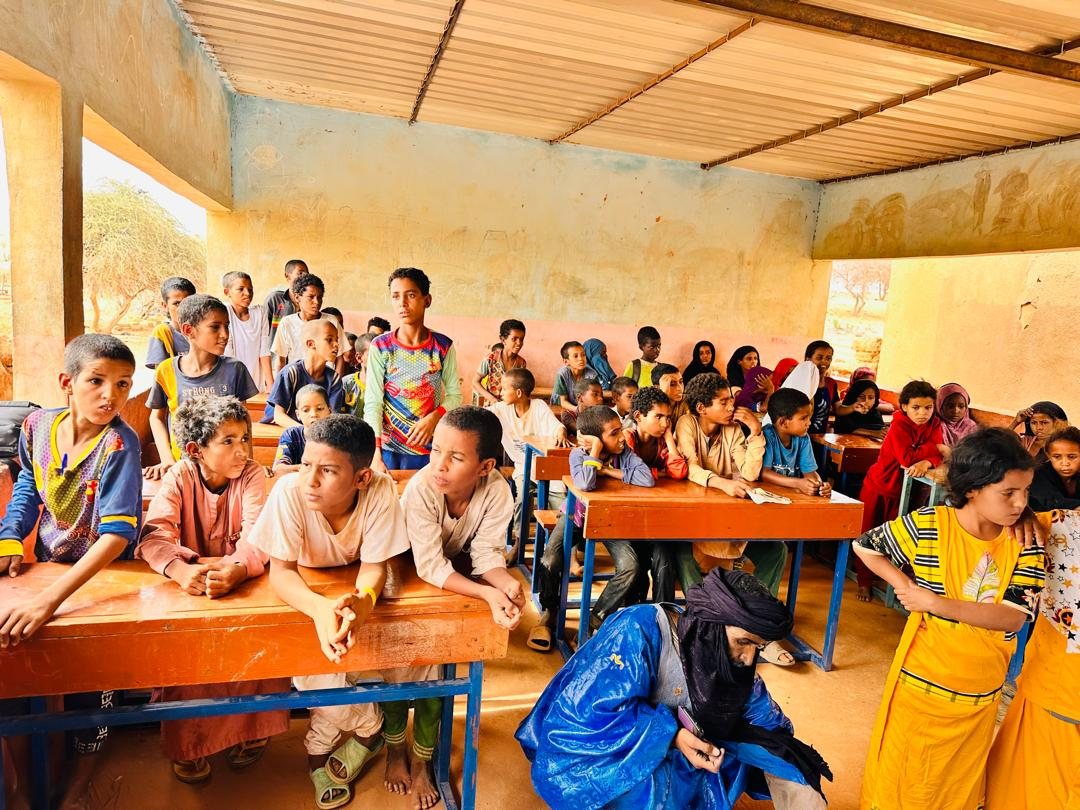
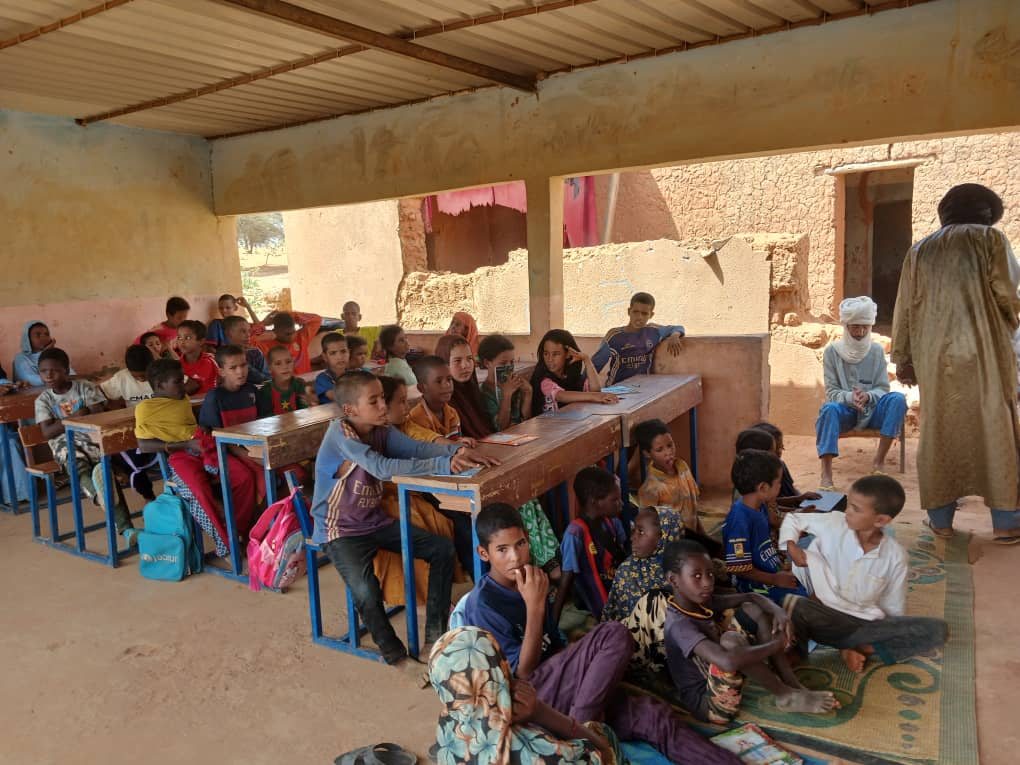
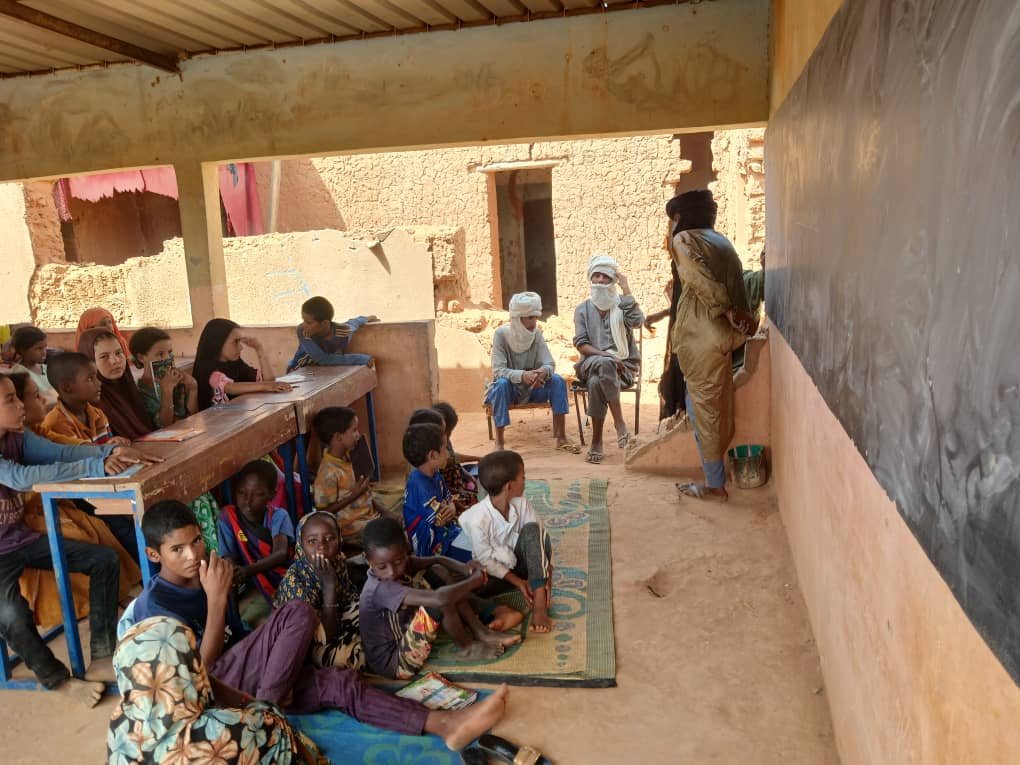
On 28 April 2025, in a classroom under a sheet-metal roof, Idaksahak children wait their turn. On a mat lie sandals of every colour and new clothes, still folded. Elders help each pupil try on an outfit. Behind this distribution there is no logo, no banner, no organisation. There is one woman: Rose Walet Moussa.
Children, the silent victims
Since March 2022, Idaksahak civilians in the Ménaka region have been the target of repeated massacres. A United Nations mission counted at least 157 civilians killed in that region alone between 8 and 28 March 2022. That same year, Human Rights Watch documented "coordinated massacres" largely targeting the Daoussahak, and tens of thousands of people fled. On 18 and 19 October 2026, at Tagadayat, forty-eight more civilians were killed according to the Executive Bureau of the Idaksahak community, which calls the toll provisional (see our article "Tagadayat: The Duty Not to Look Away").
Violence does not stop at the dead. It empties the camps, drives families onto the roads and closes the schools. Among its least visible consequences is this one: children left to their fate, without education. All of Mali suffers from it: when schools reopened in October 2026, according to UNICEF, 2,444 schools were not functioning across the country, keeping more than 733,000 children out of class. No figure specific to the Ménaka region has been published.
One woman, no banner
Rose Walet Moussa did not wait. On her own initiative, she raised funds among those around her and contributed herself, out of her own pocket, to help these children, where the State cannot step in.
She does not claim to be an association or an NGO, still less a Robin Hood. She has no office, no acronym, no title. She has what is most lacking: humanity. Our readers already know her voice: she signed a speech published in our news section.
On 28 April 2025, it was clothes and sandals that were handed out to the pupils. It may seem little. But for a child who arrives barefoot in a classroom open to the wind, where some follow the lesson sitting on mats on the bare ground, it is dignity restored, and one more reason to come back to school the next day.
Dignity before the picture
Rose Walet Moussa does not merely give: she cares about how help is given. On 23 October 2026, she addressed this message to her people:
"To my Idaksahak people first, then to all the members of our community, especially those who take photos and videos of our women and children: please preserve their dignity before sharing their suffering. These women are our sisters, our mothers and our grandmothers. […] Ask their permission before photographing or filming them and publishing these images, without ever embarrassing them. Do not forget that what you share can travel around the world and stay on the Internet for years, without you being able to control how it spreads. Our men, our young people and our elders all have a responsibility to protect the dignity and privacy of our women and children. Let us show their needs with compassion and respect." (our translation from French)
To help without humiliating: her whole lesson lies in those words, and it holds for each of us.
An appeal to the world
Wherever there is suffering, there is always someone to cry out, even without strength or voice. Today, that cry has a name: Rose Walet Moussa. She must not be left alone.
We call on the whole world, and first of all on the Idaksahak of the diaspora, to:
- support her work, however modestly: clothes, shoes and school supplies for the children;
- share her appeal and this article, so that these children are not forgotten;
- urge humanitarian and educational organisations to take over: reopen, equip and protect the schools of the Ménaka region;
- respect, in all circumstances, the dignity and privacy of the women and children being photographed.
To support her or get in touch with her, write to the newsroom using this site’s WhatsApp button: we will put you in contact with her.
She asked for neither title nor recognition. We owe her at least this: that her gesture be known, and that it not remain the only one.
— The newsroom of Tadaksahak TV.
Sources
- Rose Walet Moussa, message to the Idaksahak community, 23 October 2026.
- Photos of Rose Walet Moussa’s initiative (distribution of 28 April 2025), provided to the newsroom.
- United Nations: at least 157 civilians killed in the Ménaka region, 8-28 March 2022.
- Human Rights Watch, "Mali: Coordinated Massacres by Islamist Armed Groups," 27 October 2022.
- Executive Bureau of the Idaksahak community, statement, Ménaka, 19 October 2026.
- UNICEF Mali, back-to-school press release "Learning needs more than just a classroom," October 2026 (Education Cluster data).